
The Journal — July 2026
Wabi-Sabi, Minimalism, and the Rise of Sculptural Home Decor
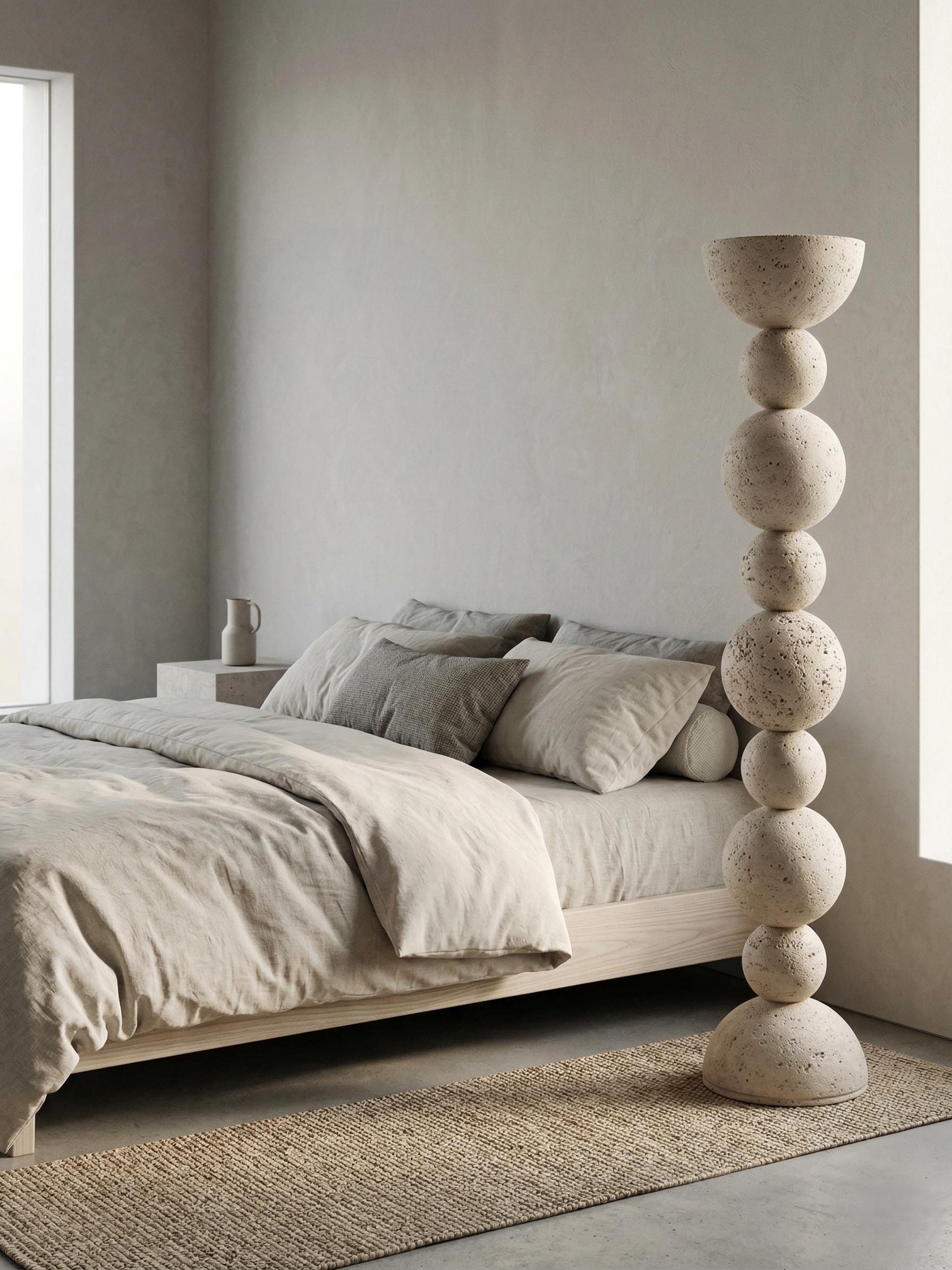
There's a quiet rebellion happening in interior design right now. After a decade of glossy, all-white minimalism — the kind that photographs beautifully but feels a little cold to actually live in — people are reaching for something warmer. Something with a pulse. That something has a name: wabi-sabi.
Wabi-sabi is the Japanese philosophy of finding beauty in imperfection, transience, and the marks that time and the human hand leave on an object. It's the opposite of mass-produced perfection. A slightly uneven edge, a hand-textured surface, a form that isn't quite symmetrical — these aren't flaws, they're the whole point.
Wabi-Sabi and Minimalism Aren't Opposites
A lot of people assume minimalism means bare and impersonal, and that wabi-sabi means rustic clutter. In practice, the two philosophies overlap more than they conflict. Both start from restraint: fewer objects, more intention, no visual noise.
Minimalism asks a room to be calm. Wabi-sabi asks the few objects in that calm room to actually mean something — to carry the trace of a hand that made them.
That's exactly the gap a piece like our Minimalist Stone-Look Totem is designed to fill: a clean, quiet silhouette with a surface that's anything but sterile.

Where Contemporary Art Comes In
The other thread running through this shift is contemporary art's growing presence in the home — not as framed prints on a wall, but as dimensional, sculptural objects you can walk around. A floor sculpture or a relief piece changes a room the way a painting never quite can, because it occupies real space and catches real light.
Our Deconstructed American Flag Wall Art takes this idea somewhere unexpected: instead of a flat printed flag, it's built from 13 individually textured relief panels, turning a familiar image into a genuine dimensional artwork.

Bringing It Home
You don't need to redesign a whole room to feel this shift. A single well-placed piece does most of the work.
Anchor an entryway or a reading corner with the Geometric Plaster Totem — its stacked, irregular form gives a hallway a sense of arrival without adding clutter.

Let the light do some of the storytelling. The Crescent Moon Floor Lamp pairs a hand-textured plaster surface with a warm ambient glow, so the object reads differently morning versus night.

Reconsider a plain wall. The Sculptural Plaster Mirror does double duty as function and art, with a raw, architectural frame instead of a standard flat one.

For outdoor or transitional spaces — entryways, patios, covered porches — the Stone-Look Totem Garden Sculpture brings the same raw, stacked-form language outside, bridging indoor and outdoor styling.

The Point Isn't Perfection
Every one of these pieces is handmade, which means no two are quite identical — a small variation in texture or tone here, a slightly different surface movement there. In a wabi-sabi frame of mind, that's not a compromise. That's the piece doing its job: reminding you that a room can be considered, minimal, and still feel completely alive.
Browse the full collection of handmade sculptural decor on monoaurel.com and find the piece that anchors your space.