
The Journal — July 2026
Totems in the Modern Home: An Ancient Form, Reimagined
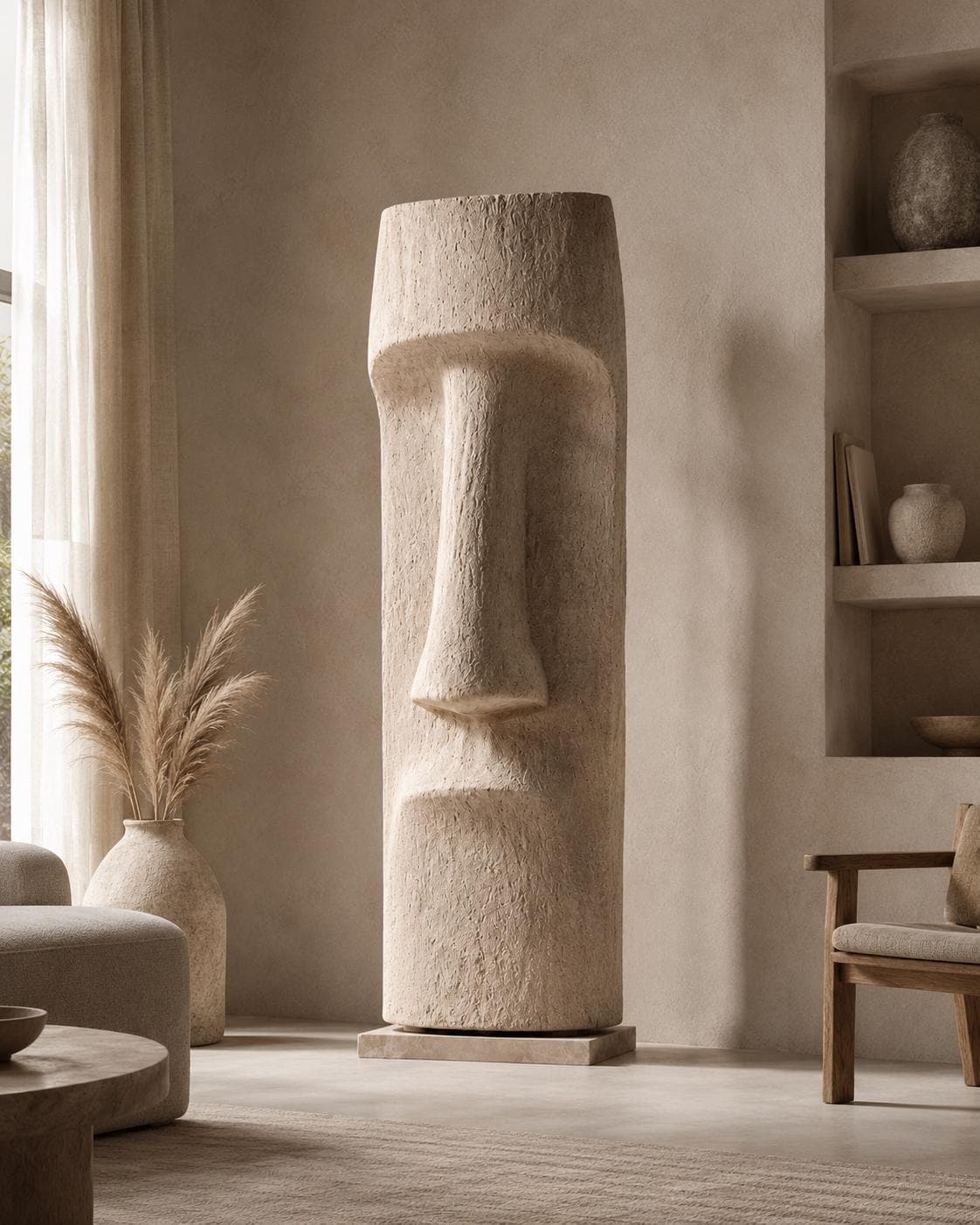
The totem is one of the oldest ideas in human decoration: a single vertical form, stacked or carved, standing as a marker of something meaningful. It's an odd thing to find thriving again in minimalist living rooms — and yet here it is.
Historically, totems were never decorative in the throwaway sense. They marked territory, told stories, or represented ancestors. The vertical stack — one form resting on another — is a shape almost every culture arrived at independently, from Pacific Northwest carvings to Moai statues to simple cairns marking a trail.
Why the Shape Still Works
A modern totem borrows that same vertical logic but strips away the narrative weight, leaving just the form: a quiet, upright presence that draws the eye without demanding a story. That's exactly what a minimalist room needs — one strong vertical line to anchor an otherwise empty corner.

Strip away the mythology and a totem is just a very old, very good answer to a very modern problem: what do you put in an empty corner.
Stacked Forms, Different Moods
Not every totem needs a face or a figure to carry presence. Some of the most effective ones are entirely abstract — stacked spheres or pebble-like forms that read as pure balance, nothing more.


Whether figurative or abstract, the rule stays the same: one totem per room is usually enough. It's meant to be the exception in the space, not the pattern.
Browse the full collection of handmade sculptural decor on monoaurel.com and find the piece that anchors your space.