
The Journal — July 2026
Negative Space as Design: The Quiet Power of an Empty Room
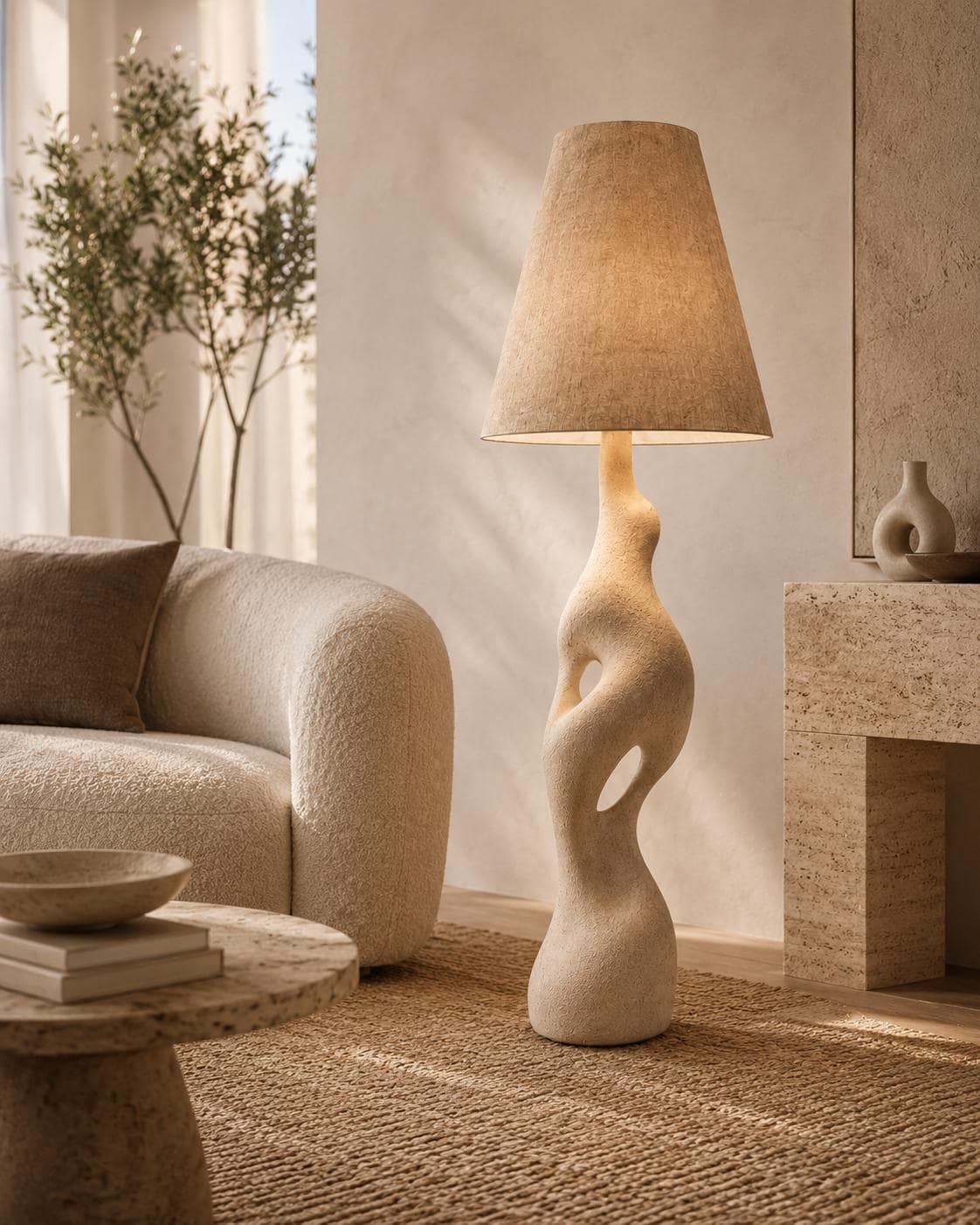
The instinct when a room feels unfinished is to add something. Usually the better move is to look at what's already empty and leave it alone.
Negative space isn't the absence of design — it's a design decision, the same way a rest in a piece of music isn't a lack of sound. A room with breathing room around each object lets you actually see that object, instead of losing it in visual noise.
Objects That Contain Their Own Emptiness
Some of the most interesting sculptural pieces take this idea a step further and build the emptiness right into the object. A lamp with an open, curved silhouette isn't just filling a corner — it's framing the wall behind it, turning empty space into part of the composition.

An empty room isn't unfinished. It's a room that hasn't been asked to prove anything yet.
A Hollow Form Can Say More Than a Solid One
The same logic shows up in hollow architectural forms — a monolith with an open center, or a mirror that frames a reflection rather than covering a wall. Both let the room keep participating in the object instead of being blocked by it.


Next time a room feels like it needs one more thing, try testing the emptiness first. It's usually already doing more work than you're giving it credit for.
Browse the full collection of handmade sculptural decor on monoaurel.com and find the piece that anchors your space.